Our Process
Here’s exactly what happens after you say go
Every project runs on the same playbook — the one we’ve refined over 14 years and hundreds of websites. Below is the whole thing: what happens, in what order, roughly how long each part takes, and the one stretch in the middle where it will feel like nothing is happening at all. (Something is. We’ll get to that.)
- Step0130–60 min
The conversation
It starts with a meeting — thirty to sixty minutes, remote, free. We’ll ask a lot of questions about your business: what you do, who your customers are, what you want the web to do for you. You’ll probably have questions too; bring all of them. No slide deck, no pressure, and no obligation — sometimes the honest answer at the end of the call is that you don’t need a new website yet, and you’ll hear that too.
Already have a website and not sure whether it needs replacing? That’s a different conversation, and there’s a whole consulting side of the shop for it — reviews, audits, and assessments that end in a straight answer. Plenty of projects start there instead.
Fig. 01 — the dev site at step 01Static - Step02About a week
The proposal
Within about a week you’ll have a written proposal: the features, specs, and associated costs, spelled out. Nothing is set in stone — if the scope isn’t quite right or the budget needs a different shape, we adjust until it fits. When it reads right, you sign it, the deposit gets billed (half up front, half at launch; bigger projects split into three milestone payments), and your project goes on the calendar.
Fig. 02 — the dev site at step 02Static - Step03Two or three weeks
The quiet weeks
First, we spin up a dev site — a private space on the web where the new website comes to life. You get the link on day one. Fair warning: for the first two or three weeks, there won’t be much to look at. This is the most anticlimactic part of the whole process. The foundation work all happens under the hood, and somewhere in week two you may catch yourself thinking,
what did I just pay these people for?
That’s normal. Every client thinks it.
The quiet weeks are also when the content comes together: a shared Google Doc for every word that will appear on the site, a spreadsheet for its structure, and a folder that needs your logo, your photos, and your videos. This part is a biggie — it’s the one stretch of the project where we genuinely need your homework.
Fig. 03 — not much to look at (yet)Static - Step04
The construction site
Then the login screen comes down, and you can watch. Walking into a half-built website is like walking into a construction site: the framing is up, the plumbing isn’t in, and you have to squint a little to see the finished house. From here on you follow along in real time, and your feedback goes straight into the build while the site is still soft enough to shape.
Fig. 04 — framing up, plumbing not inStatic - Step05
Polish, thumbs up, flip the switch
The last stretch is polish: we tweak and perfect until the site is right, and it’s only finished when you say it is. Then, with your thumbs-up, we flip a switch at the domain level and the new website takes over from the old one. Median time from deposit to launch, over the last three years: about 12.5 weeks.


From now until the end of time
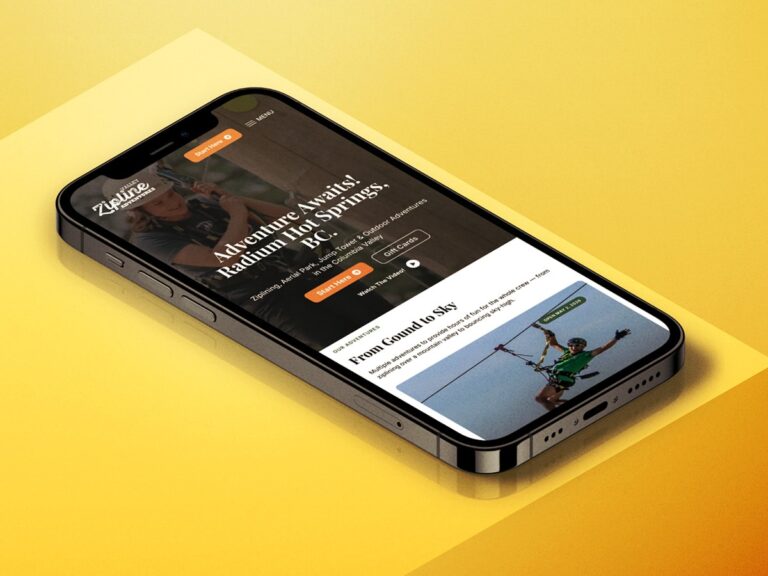
Launch day isn’t the finish line — what goes live is version one. Every site we build stays with us under Enhanced Ongoing Services: hosting, updates, upkeep, backups, security, and support, from now until the end of time. The website grows and evolves as your business does, and when you need a change made, a question answered, or a good idea kicked around, you know exactly who to call.
Step zero is an email
Tell us what you’re working on. We’ll book the conversation, and an hour of shop talk will tell us both whether this is a fit — no charge and no strings either way.